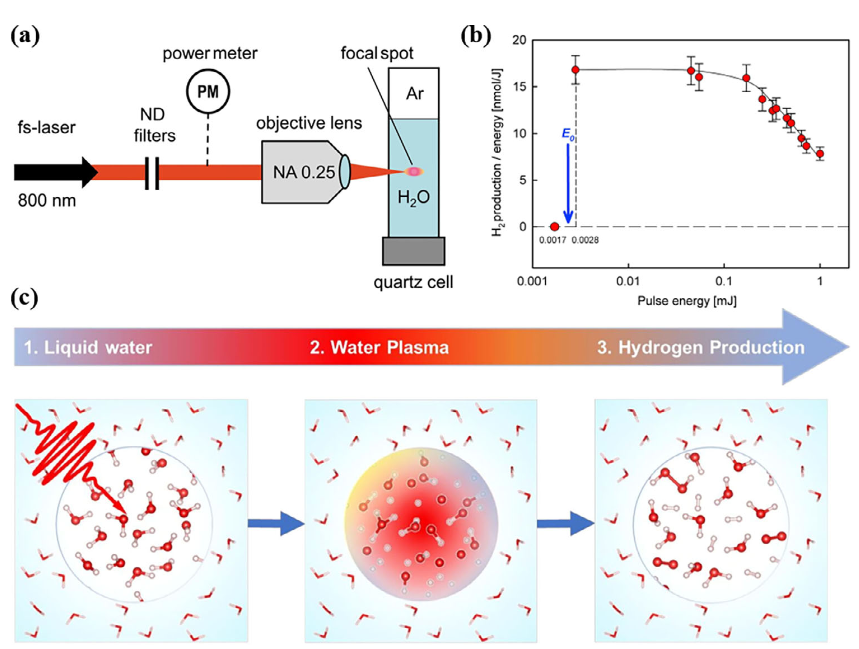
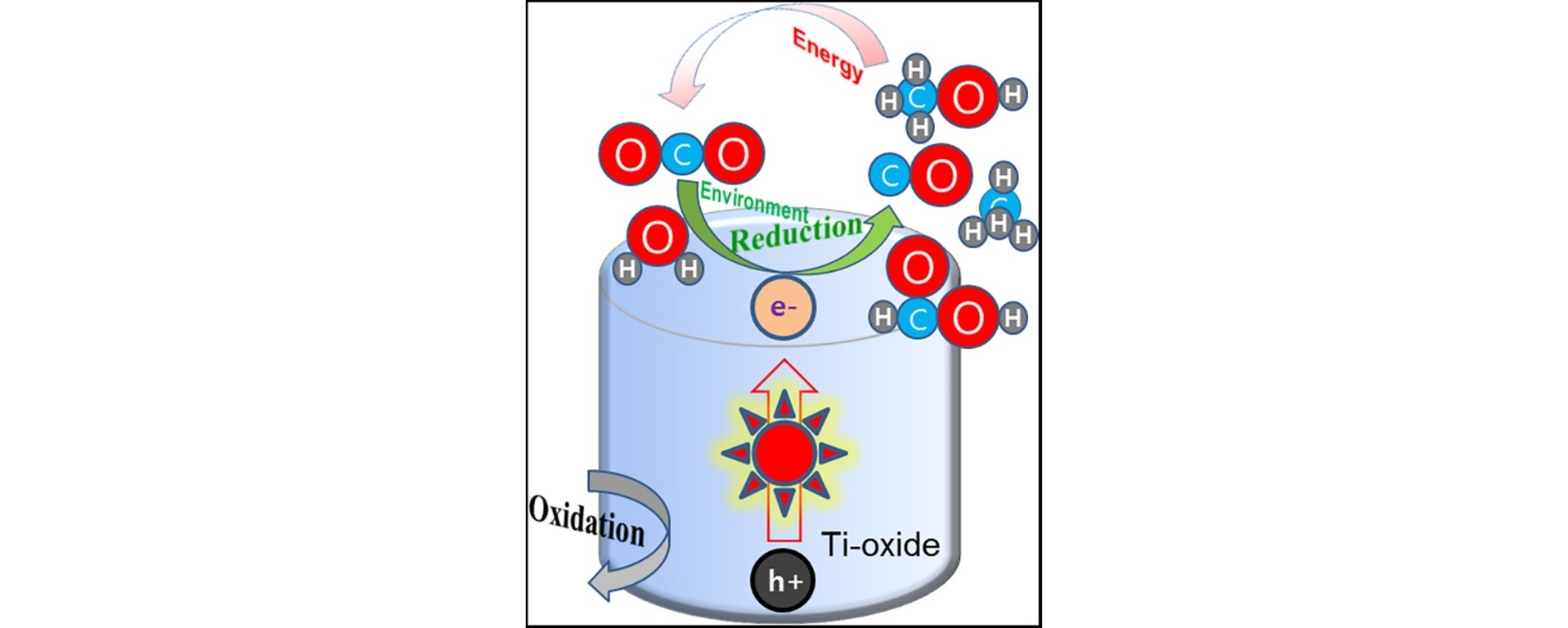
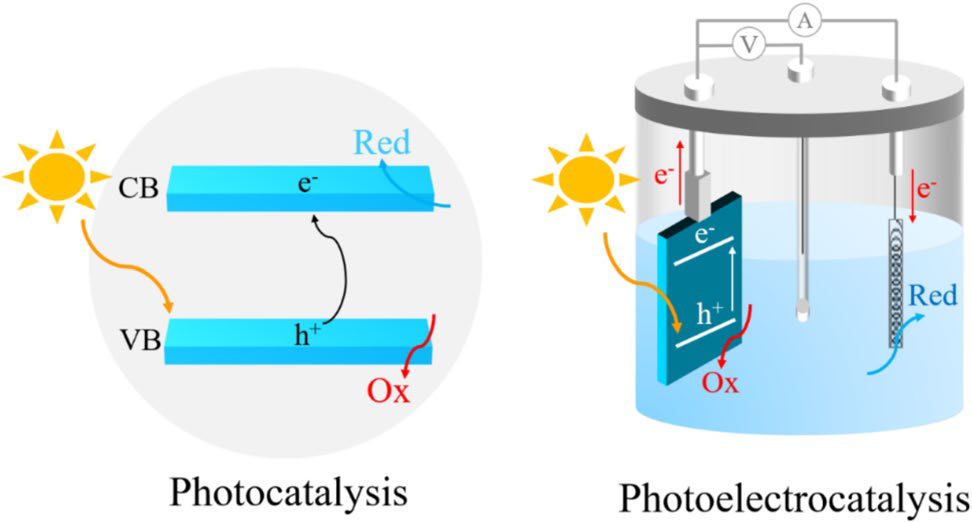
Solar, thermal, and plasma-driven chemical conversion: photocatalytic and plasma-chemical routes complementing electrochemistry for energy conversion and environmental remediation.
Keywords
Photocatalysis · Plasma chemistry · Photoelectrochemistry
Selected Publications
- 1
Synergy of Low-Energy {101} and High-Energy {001} TiO2 Crystal Facets for Enhanced Photocatalysis
Nitish Roy; Youngku Sohn; Debabrata Pradhan
ACS Nano 2013, 7, 2532-2540. DOI ↗ 📊 인용 ↗
📄 Abstract ▾
Controlled crystal growth determines the shape, size, and exposed facets of a crystal, which usually has different surface physicochemical properties. Herein we report the size and facet control synthesis of anatase TiO2 nanocrystals (NCs). The exposed facets are found to play a crucial role in the photocatalytic activity of TiO2 NCs. This is due to the known preferential flow of photogenerated carriers to the specific facets. Although, in recent years, the main focus has been on increasing the surface area of high-energy exposed facets such as {001} and {100} to improve the photocatalytic activity, here we demonstrate that the presence of both the high-energy {001} oxidative and low-energy {101} reductive facets in an optimum ratio is necessary to reduce the charge recombination and thereby enhance photocatalytic activity of TiO2 NCs.
- 3
Electrocatalytic syngas and photocatalytic long-chain hydrocarbon productions by CO2 reduction over ZnO and Zn-based electrodes
Ju Young Maeng; Ju Hyun Yang; Hye Ji Jang; Min Hee Joo; Young Jun Kim; Choong Kyun Rhee; Youngku Sohn
Appl. Surf. Sci. 2023, 609, 155349. DOI ↗ 📊 인용 ↗
📄 Abstract ▾
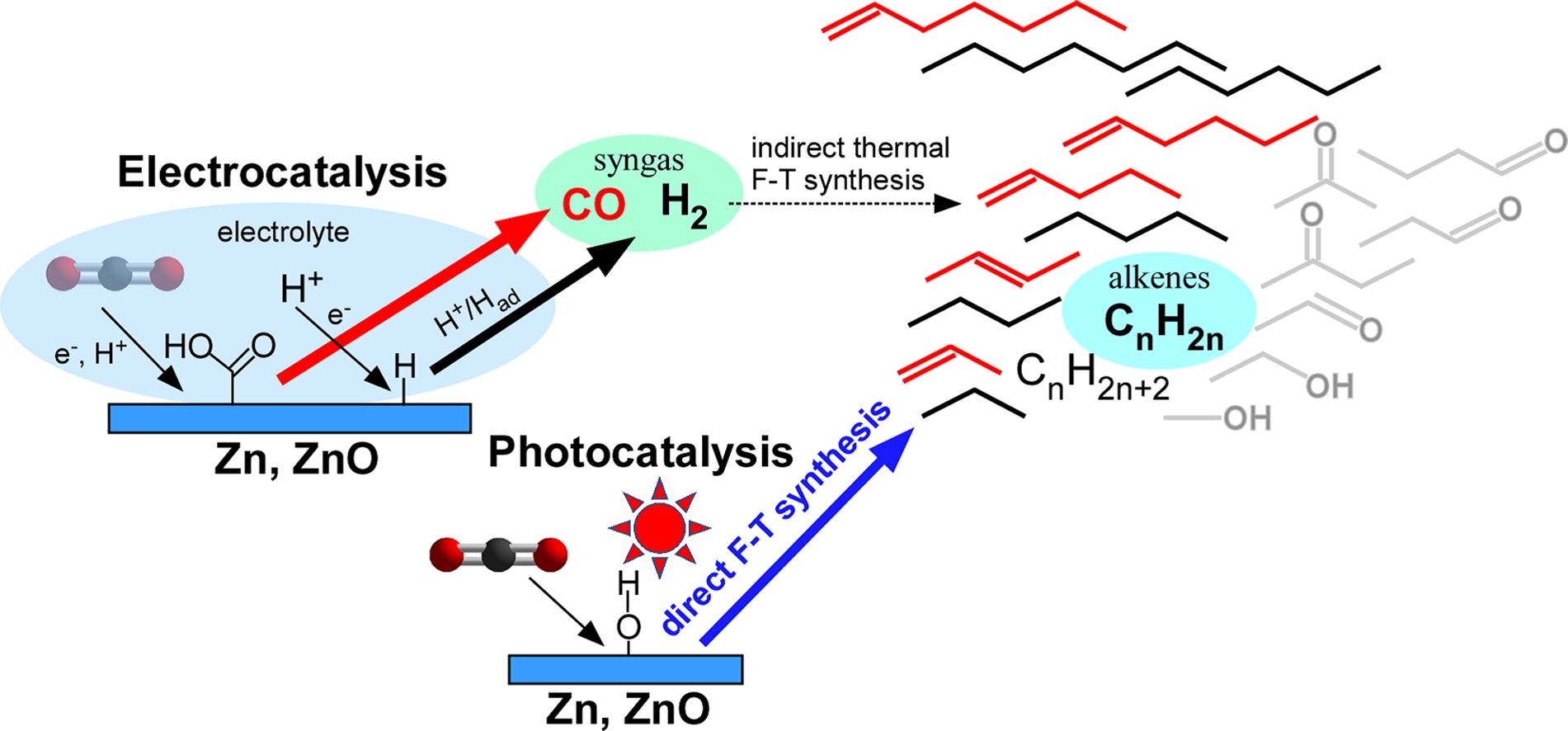
Direct electrocatalytic syngas (CO and H2) production has been attracted as a strategy for energy and environmental solution. Herein, Zn and ZnO nanorod (ZnONR)-based catalysts were demonstrated to show promising performance in syngas production by electrocatalytic CO2 reduction. The H2/CO ratio was optimally tuned by surface modification, applied potentials, electrolytes, and Pt-deposition. ZnONR was observed to be commonly reduced to metallic Zn accompanying surface reconstruction during CO2 reduction. Photocatalytic CO2 reduction was also tested to observe CO, CH4, CH3OH, and some organic compounds. We report here a mimic of Fischer-Tropsch (F-T) synthesis can be achieved at ambient temperature by direct photocatalytic CO2 reduction to produce long chain hydrocarbons of CnH2n and CnH2n+2 (up to C7 compounds). Alkenes were observed to be predominant, compared with alkanes unlike the results reported in the literatures. The very unique results provide valuable information on the development of CO2 reduction electrocatalysts and photocatalysts for energy and environment.
- 4
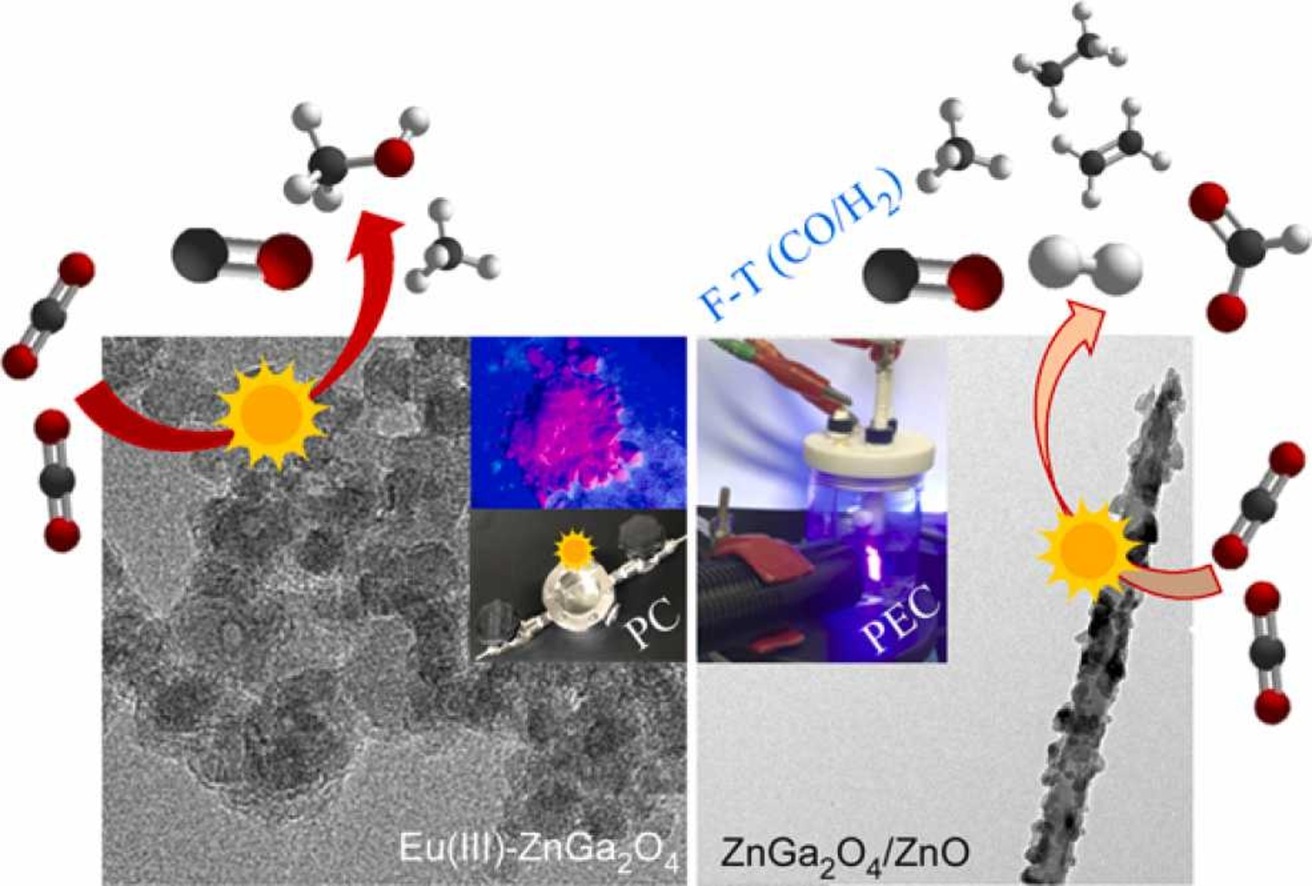
CO2 reduction by photocatalytic and photoelectrocatalytic approaches over Eu(III)-ZnGa2O4 nanoparticles and Eu(III)-ZnGa2O4/ZnO nanorods
Hye Ji Jang; Ju Hyun Yang; Ju Young Maeng; Min Hee Joo; Young Jun Kim; Sung-Min Hong; Choong Kyun Rhee; Youngku Sohn
J. CO2 Util. 2022, 60, 101994. DOI ↗ 📊 인용 ↗
📄 Abstract ▾
Value-added products by CO2 reduction have extensively been researched using many developed catalysts. Herein, Eu(III)-doped ZnGa2O4 (ZGO) nanoparticles and ZGO hybridized ZnO nanorods (ZGO/ZnONR) were evaluated for photocatalytic and photoelectrocatalytic CO2 reduction under diverse experimental conditions. For photocatalytic CO2 reduction, the CO/CH3OH production ratio was > 1 for ZGO, but < 1 for ZGO/ZnONR. For electrochemical CO2 reduction, CO and H2 were major products with minor formate, and dependent on the parameters including Eu(III)-doping. H2 and formate were increased with increasing applied potential, and CO showed the highest Faradaic efficiency at -1.6 V (vs. Ag/AgCl). Syngas (H2/CO) ratio was shown to be efficiently controlled from 0.5 to 2.0. UV light showed a dramatic effect on increasing CO production but not on H2. Formate was also increased under UV light. Overall, the present study provides strategies of controlling reduction products and syngas ratio by employing hybridized ZGO/ZnONR, doping, and UV light.
- 5
Insights into MXenes and MXene-based heterostructures for various photocatalytic applications
Shaikh Parwaiz; Youngku Sohn; Mohammad Mansoob Khan
Mater. Sci. Semicond. Process. 2025, 186, 109099. DOI ↗ 📊 인용 ↗
📄 Abstract ▾
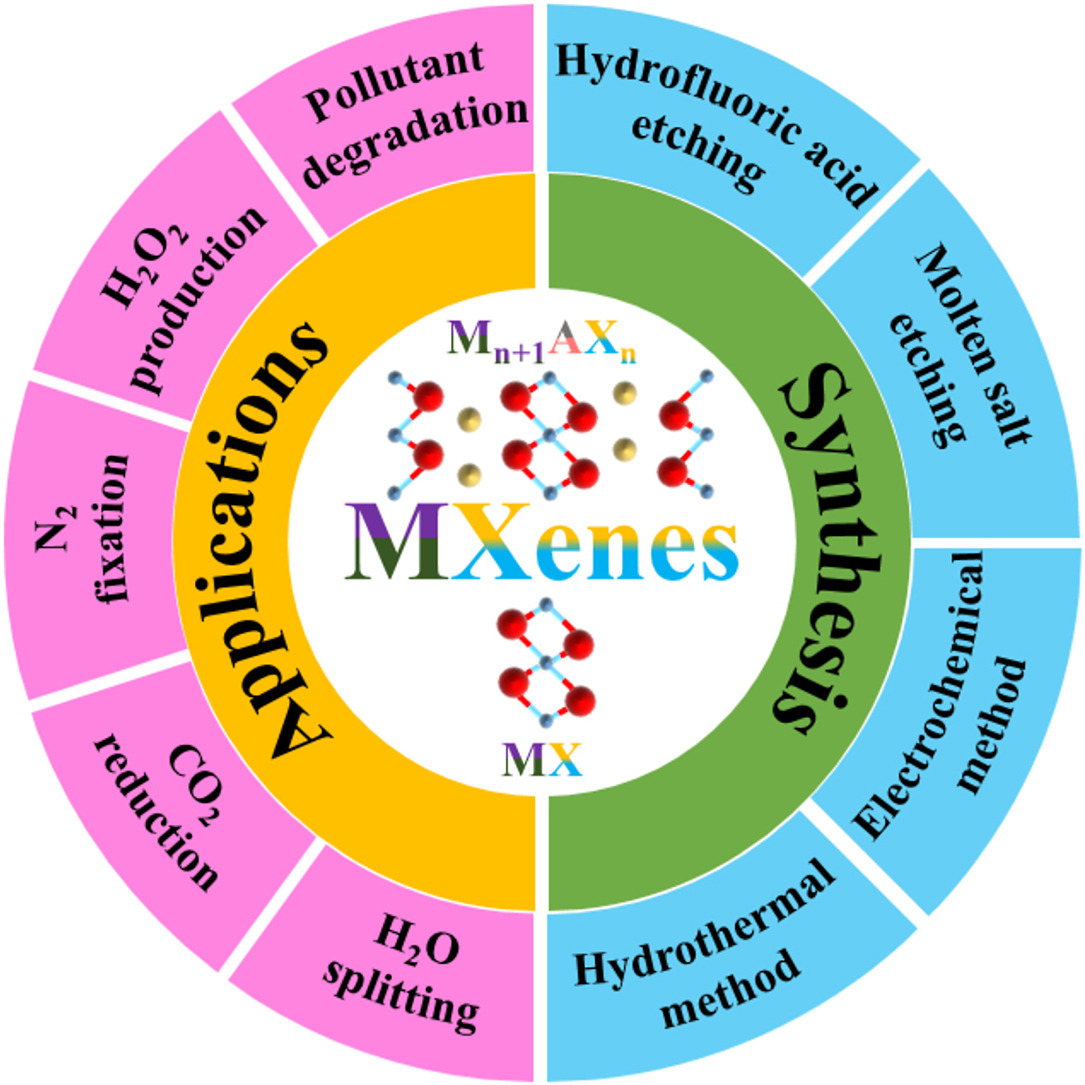
Photocatalytic conversion of solar energy into chemical energy is a prospective solution to the energy crisis and environmental challenges. MXenes, characterized by their unique surface features and physicochemical properties derived from their atomically thin layered structures, are becoming promising candidates for various photocatalytic applications. This review offers a concise analysis of the structure and categorization of MAX phases and MXenes. The discussion covers a succinct overview of different synthesis techniques employed in the preparation of MXenes, encompassing traditional HF etching methods, HF-free alternatives, additive-mediated synthesis, and direct synthesis. This study highlights MXenes and related heterostructures as photocatalysts for H2O splitting, CO2 reduction, N2 fixation, H2O2 generation, and pollutant degradation. We incorporated two complementary approaches, in-situ characterization methods, and first-principles calculations, in the following section to provide a better understanding. We conclude this review by offering insights into future directions and a concise summary of the potential applications of MXenes and MXene-based heterostructures in photocatalysis. This review could serve as a valuable reference for the design and fabrication of unique and promising MXene-based photocatalysts.
- 6
Nonequilibrium Photothermal Reactions Under Pulsed Laser Excitation: Mechanisms, Dynamics, and Applications
Huieun Shim; Sy Khiem Nguyen; Hyeonji Lee; Jaehee Shin; Ilsun Yoon; Youngku Sohn
ChemCatChem 2026, 18, e01870. DOI ↗ 📊 인용 ↗
📄 Abstract ▾
Pulsed laser excitation offers a compelling approach for accessing nonequilibrium conditions in catalysis by delivering energy to surfaces in a highly localized and time‐controlled manner. In contrast to continuous‐wave irradiation, pulsed lasers concentrate energy into extremely short bursts—ranging from femtoseconds to nanoseconds—which can induce steep thermal gradients, localized heating, and even partial decoupling between electronic and lattice subsystems. These effects often lead to surface restructuring, altered binding of intermediates, or activation of otherwise inaccessible pathways. Such transient photothermal environments have shown considerable promise in driving reactions like CO 2 reduction, hydrogen evolution, and ammonia synthesis, where heat and charge localization strongly influence product selectivity. This review examines the growing field of pulsed photothermal catalysis, highlighting the fundamental mechanisms of laser–matter interactions, the distinction between thermal and nonthermal regimes, and how key laser parameters affect surface reactivity. We also survey selected reaction systems and discuss how recent developments in time‐resolved spectroscopy and computational modeling are helping to unravel the underlying dynamics and inform the rational design of next‐generation catalytic platforms.