Recycling CO2 and CO into high-value fuels (methane, methanol, and multi-carbon products) using advanced catalytic and electrochemical methods. We pursue electrochemical C–C chain growth — EC Fischer–Tropsch synthesis — at dynamic catalyst interfaces.
Keywords
CO2RR · CORR · Electrocatalysis
Selected Publications
- 1
Electrochemical Fischer-Tropsch chemistry across transition metals: A paradigm shift in sustainable liquid fuel production
Seon Young Hwang; Ju Young Maeng; Ilsun Yoon; Chang Woo Myung; Choong Kyun Rhee; Youngku Sohn
Nano Energy 2024, 128, 109881. DOI ↗ 📊 인용 ↗
📄 Abstract ▾
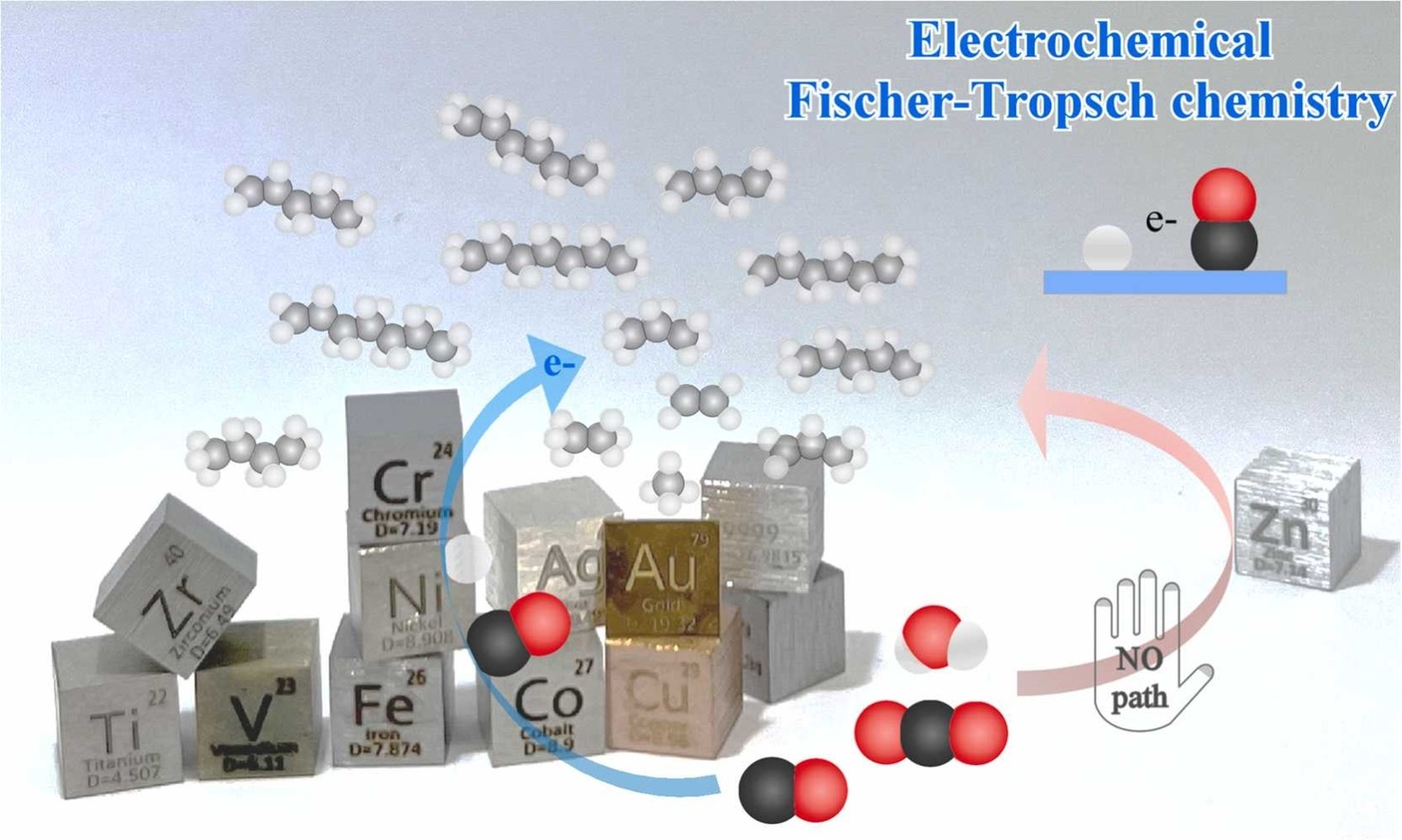
This study explores electrochemical Fischer-Tropsch (EC F-T) synthesis as an eco-friendly approach for liquid fuel production, departing from conventional energy-intensive methods. While EC syngas generation is wellexplored, the synthesis of F-T chemistry using CO2 and CO feed gases remains relatively unexplored. Investigating various transition metals, including Ti, Zr, V, Mo, Fe, Co, Ni, Pd, Cu, Ag, Au, Zn, and Cd, we present compelling evidence of F-T chemistry, yielding long-chain hydrocarbons (CnH2n and CnH2n+2, n=2–7), with Zn being an exception. This breakthrough involves surface C-C coupling chain growth, resembling traditional F-T synthesis, incorporating *CO and *CHx insertion reactions. Density of states and energy states near the Fermi level were analyzed. The experimental framework enhances our understanding of C-C coupling mechanisms, offering insights into environmentally friendly EC methods for long-chain hydrocarbon production and advancing innovative strategies in sustainable F-T synthesis for future energy solutions.
- 2
Exploring Direct Electrochemical Fischer–Tropsch Chemistry of C1–C7 Hydrocarbons via Perimeter Engineering of Au–SrTiO3 Catalyst
Ju Hyun Yang; Gi Beom Sim; So Jeong Park; Choong Kyun Rhee; Chang Woo Myung; Youngku Sohn
Adv. Energy Mater. 2024, 14, 2402062. DOI ↗ 📊 인용 ↗
📄 Abstract ▾
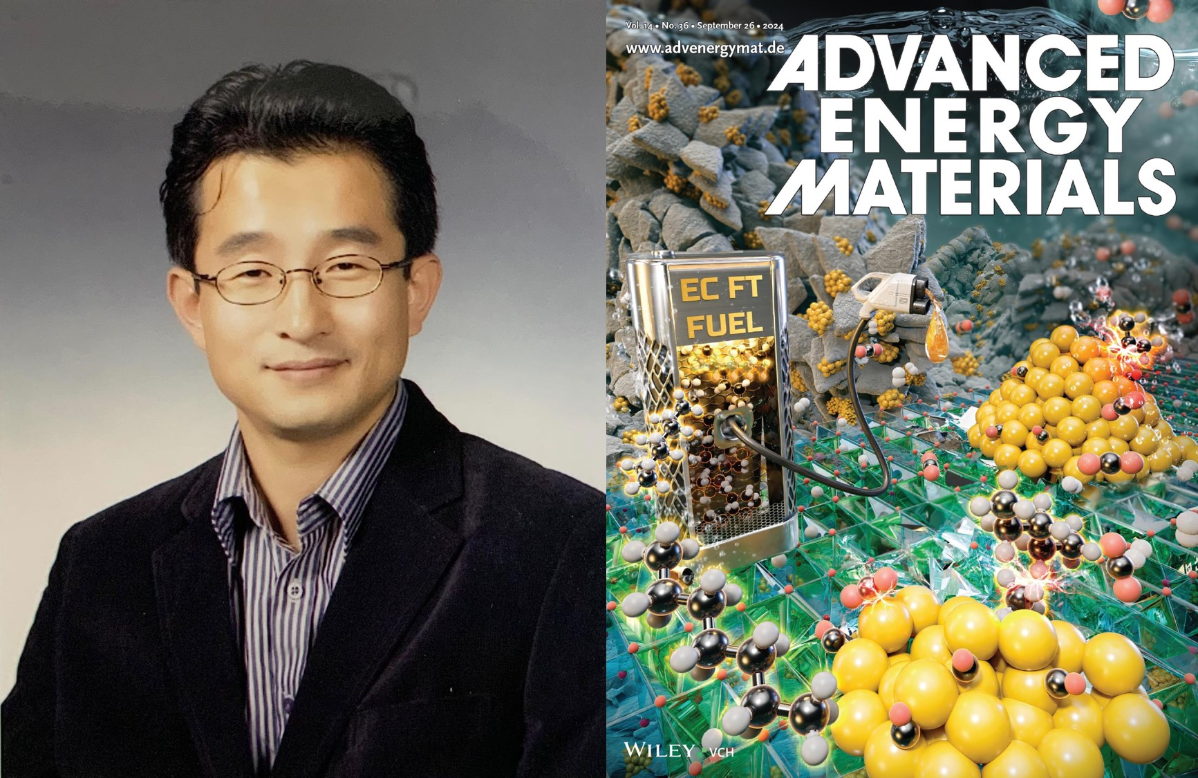
Traditionally, Fischer–Tropsch (FT) synthesis is performed using thermal catalysts and syngas (CO and H 2 ) under high‐pressure and high‐temperature conditions. However, this study introduces an approach that relies on FT chemistry assisted by electrochemistry, referred to here as direct electrochemical (EC) FT chemistry, under ambient conditions. A series of CH 4 , C n H 2n , and C n H 2n+2 hydrocarbons (n = 1–7) is successfully produced over gold (Au) nanoparticle‐loaded perovskite strontium titanate (SrTiO 3 ) nanostructures grown on rutile TiO 2 supported on Ti. Au (1.0 nm)–SrTiO 3 shows the best interface formation, with the highest Faradaic efficiency for C 2+ hydrocarbons. This direct EC‐FT process proceeds via a C─C coupling chain growth reaction at the Au‐SrTiO 3 interface as evidenced by the hydrocarbon weight distribution analysis and density functional theory calculations. The robust combination of experimental and computational findings reveals that optimum conditions for producing surface hydrogenation and C─C coupling polymerization, initiated by surface * CO and * H are achieved by controlling the undercoordinated Au at the perimeter sites of supported Au nanoparticles and by ensuring a harmonized density of states between Au and SrTiO 3 . This EC‐FT process opens a promising avenue for the direct conversion of CO 2 and H 2 O into value‐added long‐chain hydrocarbons.
- 3
Unlocking long-chain hydrocarbons (C2–7) via direct electrochemical CO2 and CO reduction on balanced Au/Ni electrodes
Young Jun Kim; Ju Young Maeng; Seon Young Hwang; Ju Hyun Yang; Ilsun Yoon; Chang Woo Myung; Choong Kyun Rhee; Youngku Sohn
Nano Energy 2023, 118, 108995. DOI ↗ 📊 인용 ↗
📄 Abstract ▾
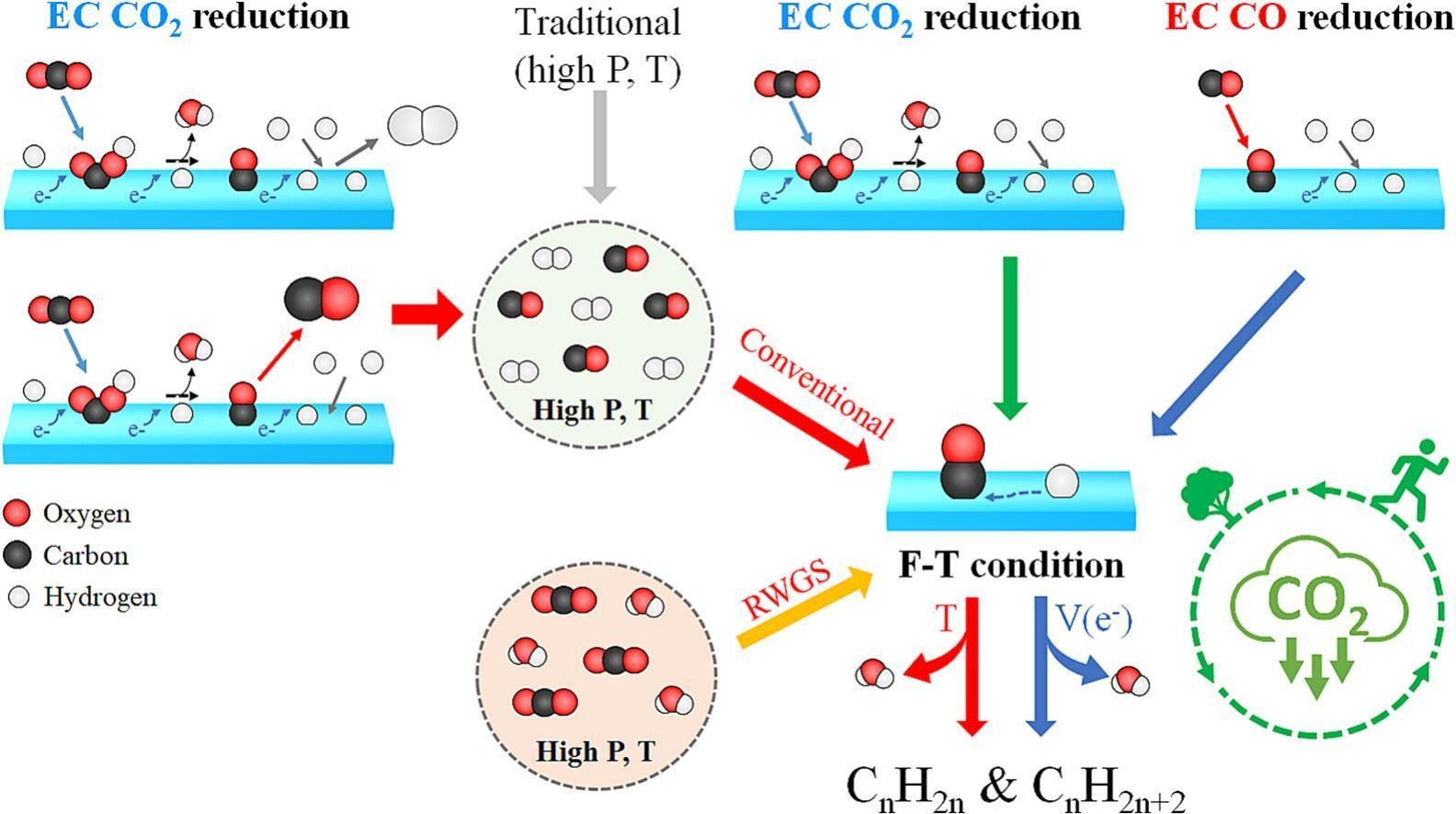
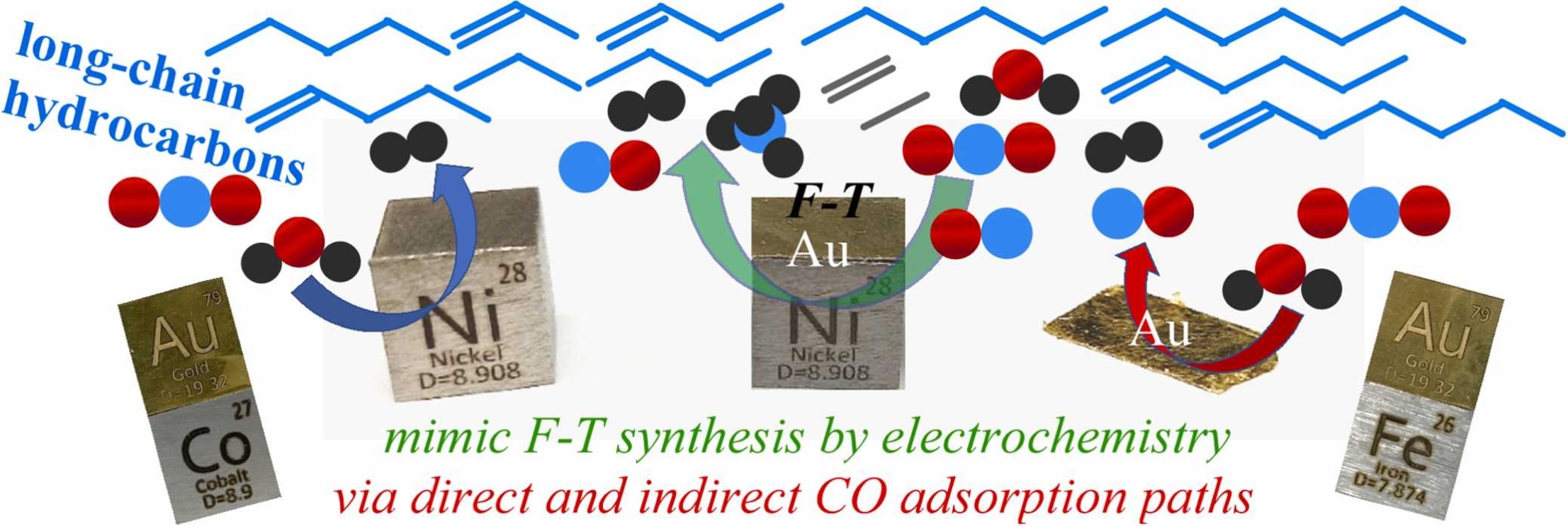
Electrochemical (EC) CO2 reduction method has been widely used as a green energy and environmental solution strategy. The use of Au/Ni electrodes was introduced to showcase a new concept of the direct EC Fischer-Tropsch (dEC F-T) synthesis pathway. This pathway involves the combination of electrodes that produce H2 and CO (syngas) during electrochemical CO2 reduction. The introduction of Au on the Ni electrode surface led to an increase in CO production and a gradual decrease in H2 production. When the interface was balanced, a pronounced F-T synthesis pathway was observed, resulting in the production of a series of hydrocarbons (CnH2n and CnH2n+2, n = 2–7). The dEC F-T synthesis was evaluated under different conditions, including electrolytes, concentrations, metal supports (Co and Fe), various overlayer metals (Ag and Cu), light irradiation, and isotope effects. The process was elucidated through surface C-C coupling polymerization reactions based on Anderson-Schulz-Flory weight distribution analysis. Additionally, the F-T synthesis was demonstrated through EC CO reduction via direct CO and H adsorption. The dEC F-T path provides a novel strategy for energy and environment by producing high-value long-chain hydrocarbons.
- 4
Electrochemical reduction of CO2 and CO using interface-engineered Au/Ti electrodes for long-chain hydrocarbon production
Young Jun Kim; Ju Young Maeng; Seon Young Hwang; Choong Kyun Rhee; Youngku Sohn
Appl. Catal. B 2023, 338, 123017. DOI ↗ 📊 인용 ↗
📄 Abstract ▾
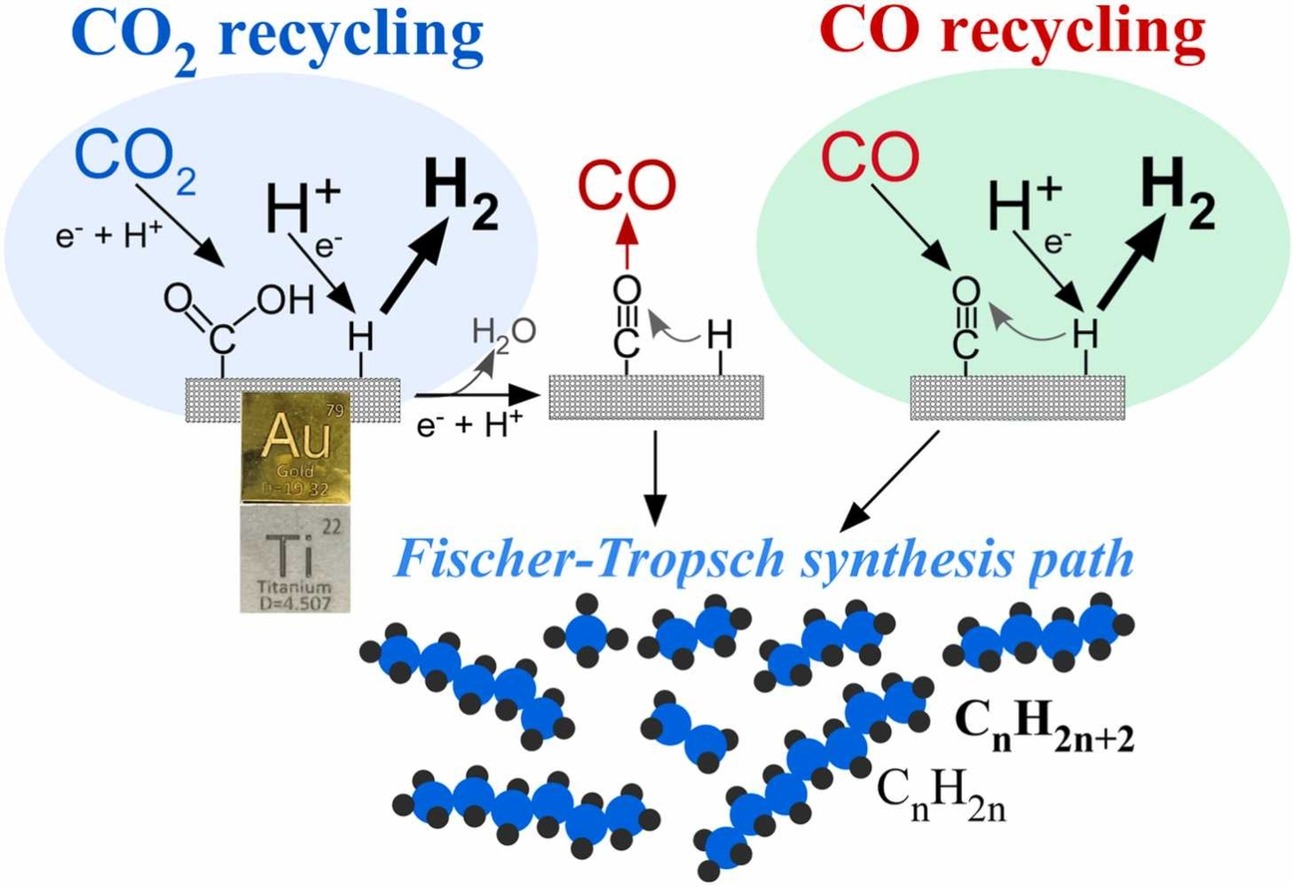
This study demonstrates the electrochemical reduction of CO2 and CO using interface-engineered Au/Ti electrodes. Direct adsorption of CO and indirect processes in CO2 conditions were proposed to form surface CO. Surface H was formed from H+/H2O. Mimicking Fischer-Tropsch synthesis between surface CO and H resulted in the production of CH4 and hydrocarbons (CnH2n and CnH2n+2, n = 2–7). Faradaic efficiency of CO increased with increasing Au coverage and reached 38%. In CO2-saturated KHCO3, long-chain hydrocarbon production was observed on Au/Ti electrodes with low Au coverage. In CO2 and CO-saturated phosphate electrolytes, higher Au coverage resulted in higher production of long-chain hydrocarbons. The ratio of alkanes to alkenes increased with increasing Au coverage but decreased with applied potential. The study provides insights into interface engineering, electrochemical long-chain hydrocarbon production, and C-C coupling mechanisms.
- 5
Opening Direct Electrochemical Fischer–Tropsch Synthesis Path by Interfacial Engineering of Cu Electrode with P-Block Elements
Ju Hyun Yang; Seon Young Hwang; Ju Young Maeng; Go Eun Park; Seo Young Yang; Choong Kyun Rhee; Youngku Sohn
ACS Applied Materials & Interfaces 2024, 16, 3368-3387. DOI ↗ 📊 인용 ↗
📄 Abstract ▾
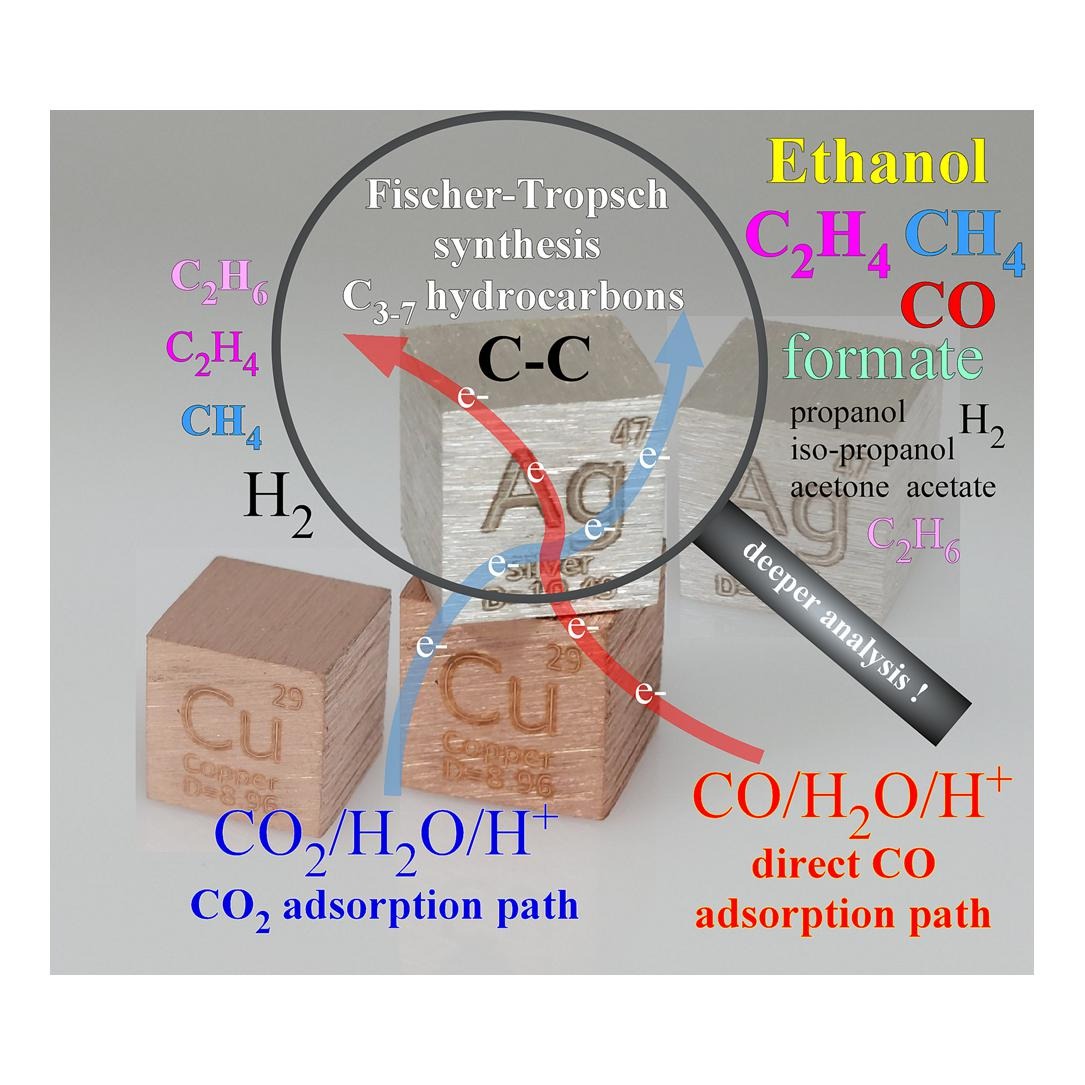
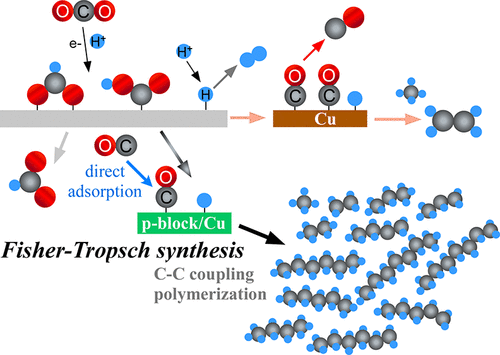
The electrochemical synthesis of syngas (CO and H 2 ) has garnered considerable attention in the context of Fischer–Tropsch (FT) synthesis employing thermal catalysts. Nonetheless, the need for a novel, cost-effective technique persists. In this investigation, we introduce a direct electrochemical (dEC) approach for FT synthesis that functions under ambient conditions by utilizing a p-block element (Sn and In) overlaid Cu electrode. Surface *CO and H* species were obtained in an electrolytic medium through the CO 2 + H + + e – → HOOC ad → *CO (or direct CO adsorption) and H + + e – → H* reactions, respectively. We have observed C 2–7 long-chain hydrocarbons with a C n H 2 n +2 /C n H 2 n ratio of 1–3, and this observation can be explained through the process of C–C coupling chain growth of the conventional FT synthesis, based on the linearity of the Anderson-Schulz–Flory equation plots. Thick Sn and In overlayers resulted in the dominant production of formate, while CO and C 2 H 4 production were found to be proportional and inversely correlated to H 2, C 2 H 6, and C 3–7 hydrocarbon production. The EC CO 2 /CO reduction used in dEC FT synthesis offers valuable insights into the mechanism of C 2+ production and holds promise as an eco-friendly approach to producing long-chain hydrocarbons for energy and environmental purposes.
- 6
Electrochemical CO2/CO reduction on Ag/Cu electrodes and exploring minor Fischer–Tropsch reaction pathways
Gaeun Yun; Seon Young Hwang; Ju Young Maeng; Young Jun Kim; Choong Kyun Rhee; Youngku Sohn
Appl. Surf. Sci. 2024, 649, 159179. DOI ↗ 📊 인용 ↗
📄 Abstract ▾
Ag/Cu hybrids have emerged as highly efficient catalysts for electrochemical (EC) CO2 reduction, yielding impressive C–C coupling products. We investigate Ag/Cu electrodes prepared via sputter deposition to explore their potential in EC CO2 and CO reductions. Our study highlights the significant impact of Ag thickness on resulting gas and liquid products, emphasizing the vital role of the Ag/Cu interface. Under CO2-saturated conditions, CO, CH4, and C2H4 are produced with high Faradaic efficiencies, while CO2-saturated KHCO3 generates formate, ethanol, propanol, isopropanol, acetate, and acetone. Experiments in phosphate conditions reveal new pathways for long-chain hydrocarbons (CnH2n and CnH2n+2, n = 2–7), typical products of Fischer-Tropsch chemistry. We also demonstrate CO hydrogenation to CH4 and C2-7 hydrocarbons, with alkane/alkene ratios influenced by electrolyte nature, concentration, applied potential, and Ag-modified Cu. These insights have implications for energy, environmental applications, and the future of EC CO2 and CO reduction through C–C coupling.